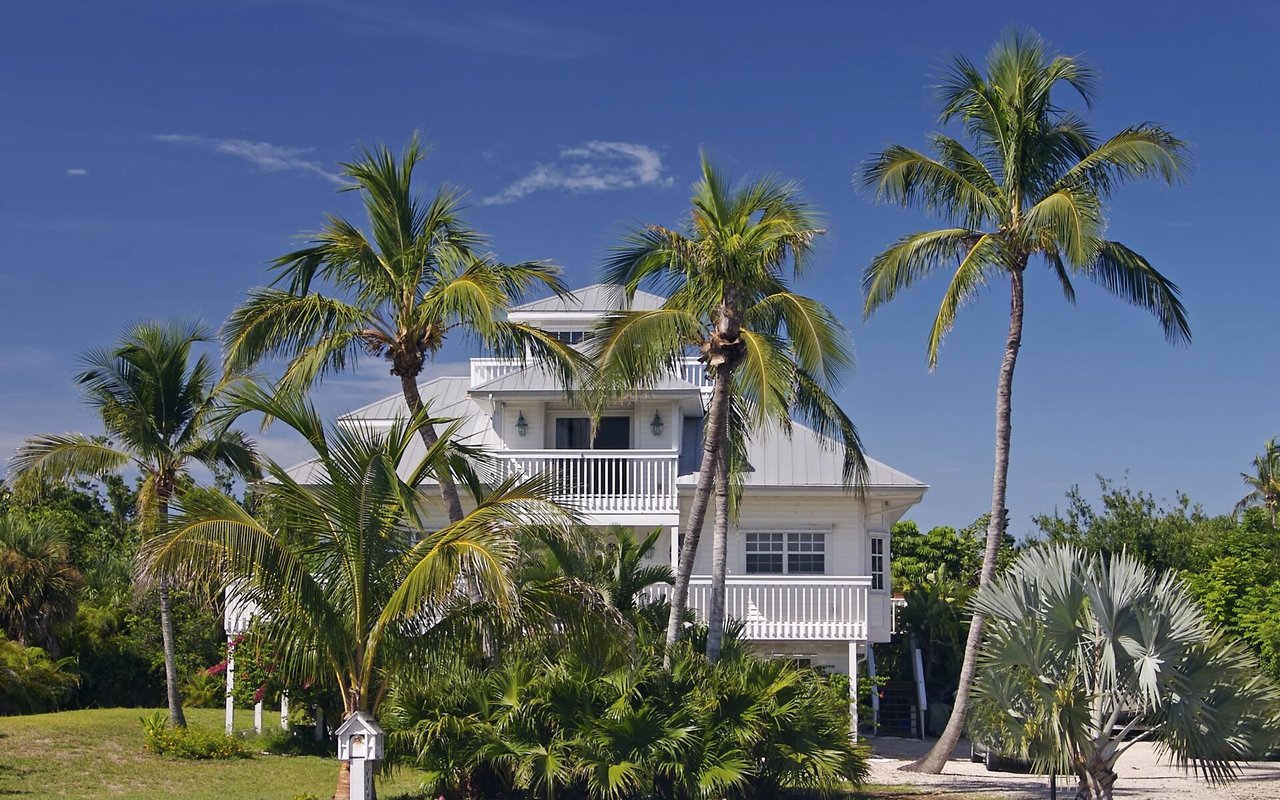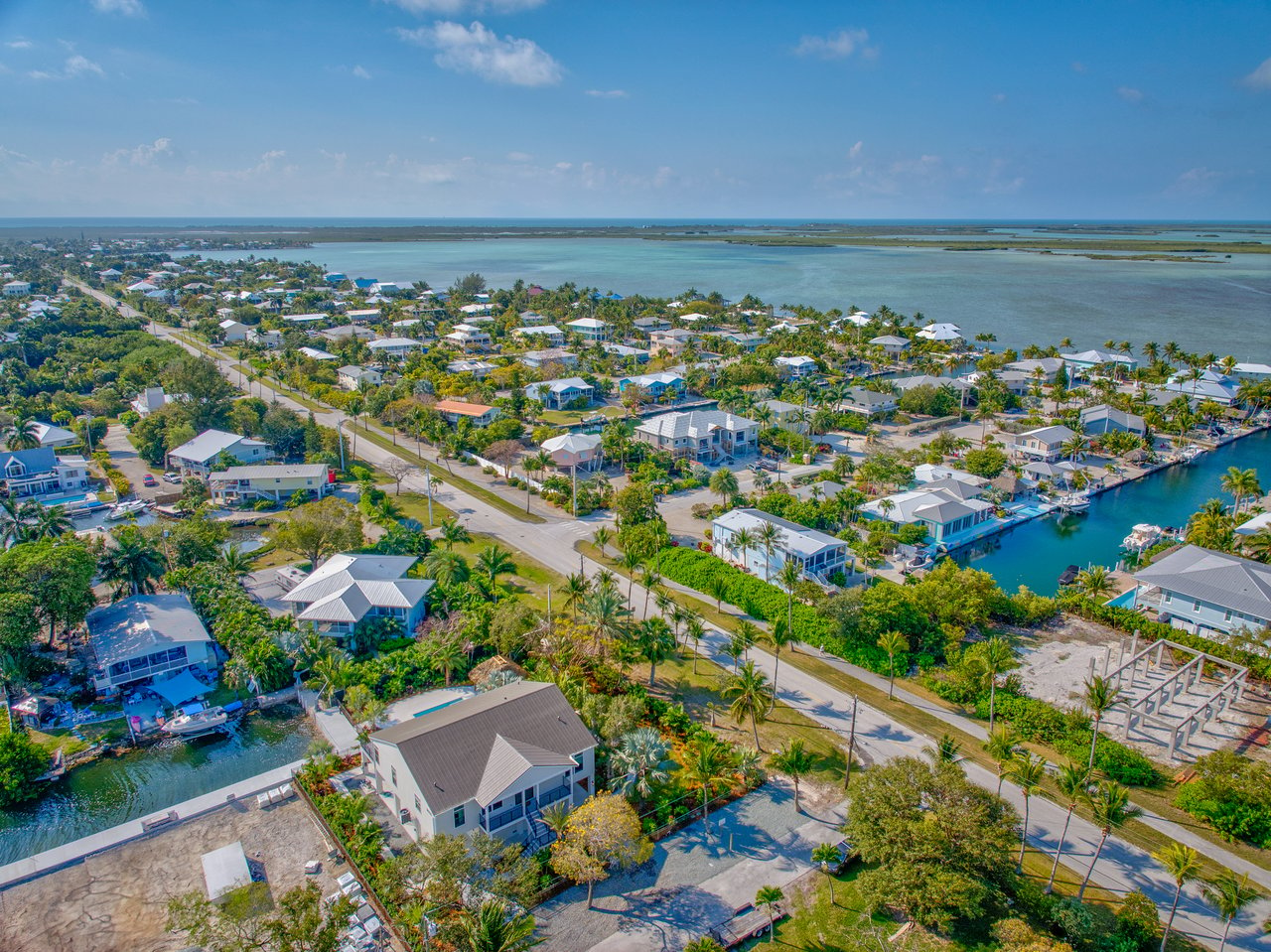
A vacant canal lot on Cudjoe Key and a finished house two doors down can look like the same kind of purchase at two stages of completion. In unincorporated Monroe County they are different assets. The house already holds a lawful dwelling unit. The lot holds a place in a line, and as of this fall that line is paused.
Monroe County's previous pool of residential building permit allocations ran out when the new ROGO year began on July 13, 2026, according to an October 2, 2026 county planning staff memo. ROGO, the Rate of Growth Ordinance, has limited new homes in the Keys since 1992. It exists so the island chain can still be evacuated within the time state law allows before a hurricane. Without an allocation, a buildable lot in the Lower Keys can't get a new house.
A year with no new market-rate permits
Emily Schemper, the county's growth management director, described the gap plainly in an interview with Keys News Talk: "We're kind of going on a pause now for about a year." The station reported that applications under the new system are expected to begin in July 2027.
The state has already approved the new allocations. The county still has to build the system for awarding them. The 2025 legislative session passed Chapter 2025-190, known as Senate Bill 180. It raised the Keys' hurricane evacuation clearance standard from 24 to 24.5 hours and directed the state to model and distribute no more than 900 new allocations over at least 10 years. Keys Weekly reported at the time that the new rights would be limited to one per vacant, buildable parcel, with priority for owner-occupied, affordable and workforce housing.
On December 17, 2025, the Florida Cabinet, sitting as the Administration Commission, divided those 900 allocations. Unincorporated Monroe County received 657, which covers the Lower Keys from Big Pine Key through Sugarloaf. In Schemper's words to Keys News Talk, "You can't just start giving them out. You have to amend your comp plan and your code to put the system in place."
The county staff memo prints the release schedule this way. Adjacent windows share their boundary years exactly as the memo lists them.
Window | Allocations for unincorporated Monroe County |
|---|---|
Jan. 1, 2026 to Dec. 31, 2027 | 219 |
Jan. 1, 2028 to Dec. 31, 2030 | 109.5 |
Jan. 1, 2030 to Dec. 31, 2032 | 109.5 |
Jan. 1, 2032 to Dec. 31, 2034 | 109.5 |
Jan. 1, 2034 to Dec. 31, 2035 | 109.5 |
Most of the new allocations come with a work requirement
The pause matters less to a second-home buyer than what comes after it. The county created a new allocation category called Market Rate Workforce Housing. The staff memo defines it as dwelling units for people who earn at least 70 percent of their income as members of the Monroe County workforce. Anyone building under that category takes on a deed restriction that limits occupancy to members of the workforce for 99 years.
Schemper told Keys News Talk the category is "sort of like affordable, but it doesn't have the income and rent restrictions." Instead, "the occupants, whether owner or renter, have to earn 70% of their income working in Monroe County."
The split leans heavily toward that category. The staff memo shows 78 percent of the 657 allocations reserved for Market Rate Workforce. It proposes a floor of 54 allocations a year starting in 2026, with at least 42 of them in the workforce category. Schemper put the first cycle at 24 traditional market-rate permits and 195 market-rate workforce permits, countywide.
Compare that with the old system. Under the previous state rule, the county issued 197 new units a year, and market-rate allocations could reach 126 a year. A vacation home on a Summerland Key lot, used a few months a year by an owner whose income comes from outside the Keys, fits the traditional market-rate line. That line is now a small share of a smaller pool.
The new allocations in the Lower Keys mostly go to people with local paychecks. For a buyer whose income is earned elsewhere, an existing lawful home carries something new construction on a vacant lot may not offer for years.
Points decide the line, and time in line helps less
People who already applied keep their place. Schemper told Keys News Talk that permits on the ROGO waiting list "will remain on that waiting list for the market-rate units that become available starting next summer," and that applicants can switch to the workforce line if they choose.
Being on the list is different from being near the front of it. The county's Lower Keys market-rate ranking for the final quarter of the old system covered April 14 through July 13, 2026, and the Planning Commission approved it on August 26, 2026. It orders applicants by total points. The six entries marked at the top of that list had application dates from May 2024 to July 2026. An application on Cudjoe Key filed in July 2026 scored 47 points and ranked second. An application filed in March 2022 scored 44.5 and ranked ninth.
The points come from features of the parcel and the plans, and they include:
- Land tier. The habitat designation of the parcel sets the base score. Tier 1 carries 10 points, Tier 3-A carries 20, and Tier 3 carries 30.
- Wetland adjustments. Separate tier adjustments apply for wetlands.
- Design and efficiency. The ranking columns include green building, solar photovoltaic, cistern and water reuse, and efficiency features.
- Perseverance. Points accrue for time spent in the system.
Every entry at the top of that list started from the Tier 3 base of 30. So a lot's tier designation goes a long way toward deciding how long its owner waits, and the price of the dirt doesn't show that.
Big Pine and No Name Key run on a separate track
Big Pine Key and No Name Key are their own ROGO subarea, with ranking fields that include Key deer and Lower Keys marsh rabbit corridor points and acquisition fund points. Under the schedule that ended July 12, 2026, that subarea received four market-rate allocations a year. The rest of the Lower Keys subarea received 28.
The October 2026 draft keeps the separate Big Pine and No Name framework and proposes a maximum of one Tier I award there every two years. The rest of the Lower Keys subarea would be capped at one Tier I award a year after July 12, 2026. That language is proposed, not adopted. It points toward the tightest limits on the islands where the National Key Deer Refuge keeps its nature center on the Overseas Highway.
The county is also a buyer
Lot owners have another possible outcome besides building or waiting. Administrative relief is the process for a property owner who has waited in ROGO and met the code's criteria. The draft defines it as county action that relieves a property from continuing ROGO restrictions. One common form is the county buying the lot.
The proposed amendment would raise those purchase offers from fair market value to more than fair market value, as set by the county's appraisal. Staff wrote that the change "may provide greater incentive for property owners to sell for the purpose of retiring development rights" and makes the county "more competitive on the open market." The Miami Herald reported in June 2025 that the new allocation period was framed partly as a response to potential takings litigation. Schemper told the paper the extra time could allow strategies such as raising money to buy vacant lots.
Existing rights carry the value, and Sugarloaf Lodge shows it
Rights tied to existing units work differently. The proposed code lets lawful residential or transient units transfer to another site within the same ROGO subarea, under conditions. Lawful hotel and motel rooms and campground or RV spaces count among the eligible transient units. The same draft would extend the moratorium on new transient units, hotel rooms included, to July 12, 2036.
That is why rights show up in a listing pitch. When Sugarloaf Lodge & Marina near Mile Marker 17 came to market at $45 million, The Real Deal reported in January 2026 that the property held vested rights to rebuild 24 hotel rooms lost to Hurricane Wilma. A house on Ramrod or Summerland Key that already holds a lawful dwelling unit carries the same kind of right at residential scale.
What is still unsettled before Thanksgiving
The framework isn't final. Commissioners approved it 4-0 in July, with Commissioner Craig Cates absent. The Key West Citizen reported that Florida's Department of Commerce then objected that the amendments did not reserve enough allocations for affordable housing. For the October 21 meeting, planning staff proposed revising the 10-year schedule so that 33 allocations, or 5 percent, would be deed-restricted affordable units. They also recommended continuing adoption to November 17. Schemper has also said she expects many workforce allocations to be held for later years. "I don't see 219 permits going out in one year," she told Keys News Talk.
Quick answers
Can a vacant Lower Keys lot get a new permit this year? New market-rate applications under the new system are expected to start in July 2027, per the county's growth management director.
Does the workforce category cap income or rent? Schemper said it does not. The requirement is that occupants earn 70 percent of their income working in Monroe County, under a 99-year deed restriction.
Does an earlier application date guarantee a permit? No. The August 2026 Lower Keys ranking orders applicants by points, and a 2026 application outranked one filed in 2022.
**This post is general information, not legal, tax or financial advice. ROGO status, tier designation and any deed restriction should be confirmed for a specific parcel with Monroe County Planning and an attorney before you rely on them.
A lot's place in the ROGO line, its tier, and whether a house on it already holds a lawful unit can shape a Lower Keys purchase as much as the water view. The Spottswood Team can help you look at those details parcel by parcel, from Big Pine Key to Key Haven, before you make an offer. Get in touch.