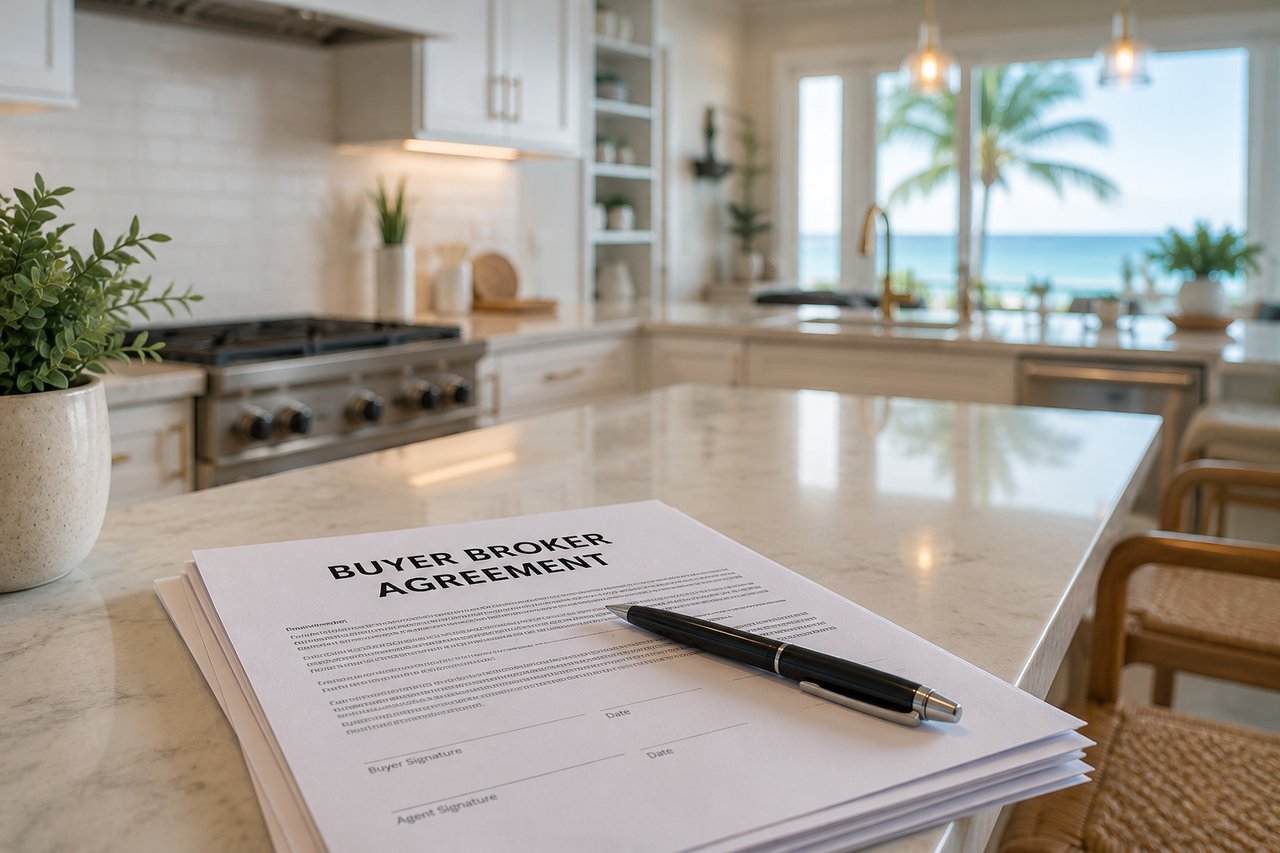
If you have looked at homes recently or spoken with a Realtor in Florida, chances are you have heard a new phrase being tossed around:
“Buyer Broker Agreement.”
And if your first reaction was confusion, hesitation, or even skepticism, you are definitely not alone.
We hear the questions every day:
- “Why do I have to sign something before seeing a house?”
- “Am I locked into something?”
- “Does this mean I have to pay my Realtor?”
- “Is this a new law?”
The reality is, a lot changed in real estate recently, and many buyers are still trying to understand what these agreements actually mean and why they suddenly seem to be required.
Unfortunately, there is also a lot of misinformation floating around online, which can make the process feel more intimidating than it really is.
At The Spottswood Team, we believe informed buyers make better decisions. So rather than making this feel overly complicated, we wanted to create a straightforward guide to explain what Buyer Broker Agreements are, why they exist, what changed in Florida, and what questions you should ask before signing anything.
Most importantly, we want buyers to feel informed, comfortable, and confident throughout the process.
Buyer Broker Agreements Explained: What Florida Buyers Need To Know
If you have recently started shopping for a home, you may have experienced something new:
A Realtor asking you to sign paperwork before touring a property.
For many buyers, this can feel confusing or even uncomfortable at first.
- “Why am I signing something before seeing homes?”
- “Does this mean I owe money?”
- “Did real estate rules suddenly change?”
The short answer: yes, some things changed.
But the good news is that Buyer Broker Agreements are actually designed to create more clarity and transparency between buyers and Realtors.
This article is meant to help explain what changed, why these agreements exist, and what buyers should know before signing one.
Why Are Realtors Asking Buyers To Sign Agreements Now?
Following changes related to the National Association of Realtors (NAR) settlement, Realtors who participate in the MLS are now required to have a written agreement with buyers before touring homes in most situations.
This is not a Florida law requiring consumers to sign something out of nowhere.
Rather, it is a requirement tied to MLS participation and Realtor membership that changed how buyer representation is documented.
In practical terms, if a Realtor is actively helping you search for homes and touring properties with you, there will typically need to be some form of written agreement in place before showings begin.
The goal is simple: transparency.
Everyone should understand the relationship, expectations, and compensation structure upfront.
What Is A Buyer Broker Agreement?
At its core, a Buyer Broker Agreement is simply a written agreement between a buyer and a real estate professional outlining:
• What services the Realtor will provide
• How representation works
• How compensation may be handled
• What responsibilities exist on both sides
Think of it less like a surprise contract and more like clarity in writing.
The reality is that buying a home involves significant:
- strategy,
- time,
- negotiation,
- scheduling,
- market research,
- inspections,
- contracts,
- and problem solving.
These agreements help clearly define how your Realtor will work on your behalf.
Florida Actually Has 3 Different Buyer Agreement Options
One of the biggest misconceptions right now is that every buyer must sign a long term exclusive agreement.
That is not true.
Florida Realtors currently offers 3 different agreement types, and the right one depends on the situation:
1. Property Pre Touring Agreement
This is typically a shorter form used before touring property.
Its purpose is mainly to provide required disclosures and basic information regarding broker compensation.
Think of this as an introductory level agreement.
2. Showing Agreement
This agreement can be used for specific homes a buyer wants to tour.
For example, if someone only wants to see a handful of properties, a Showing Agreement may make sense.
It is more limited in scope and property specific.
3. Exclusive Buyer Brokerage Agreement
This is the most comprehensive option.
It establishes a formal working relationship between a buyer and Realtor and outlines duties, expectations, compensation terms, and representation over a period of time.
Not every buyer situation looks the same, which is why different agreement options exist.
The Biggest Myth Right Now
Let’s address the elephant in the room.
Many buyers immediately assume:
“If I sign this, I automatically have to pay my Realtor out of pocket.”
Not necessarily.
Compensation is fully negotiable and varies from transaction to transaction.
Every situation is different, and compensation can be discussed and negotiated depending on the terms of an agreement and the transaction itself.
The important takeaway:
Ask questions.
A good Realtor should walk you through exactly what you are signing and answer questions clearly before anything is agreed to.
What Counts As “Touring A Home”?
Another common question:
“What if I just want to go look at a house?”
According to NAR guidance, written agreements are generally required before a Realtor tours a home with a buyer. Touring includes physically entering a property or even arranging a live virtual tour.
However, there are important exceptions.
Open Houses Work A Little Differently
If a listing agent is hosting an open house on behalf of the seller, a Buyer Broker Agreement is generally not immediately required for an unrepresented buyer walking through.
But if your Realtor is actively working with you and taking you to properties, a written agreement is typically required before touring.
This is one of the biggest areas of confusion, which is why communication matters.
Why Transparency Is Actually A Good Thing
While this change initially caught many people off guard, there is a positive side to it.
Buyers now have clearer expectations about:
• How their Realtor is representing them
• What services are being provided
• Compensation conversations upfront
• What type of relationship exists
In many ways, this creates more transparency than the industry previously had.
Who You Work With Matters
Buying a home, especially in a unique market like Key West and the Lower Florida Keys, involves much more than opening doors.
- Insurance questions.
- Flood zones.
- Market timing.
- Neighborhood differences.
- Permits.
- Investment goals.
- Negotiation strategy.
These are decisions that deserve thoughtful guidance.
At The Spottswood Team, we believe education comes first. Whether someone is ready to buy tomorrow or simply beginning to explore options, our goal is always to provide clarity and help people make informed decisions.
Because who you work with matters.
Final Thoughts
If a Realtor asks you to sign a Buyer Broker Agreement, do not panic.
- Ask questions.
- Understand the purpose.
- Talk through the options.
- And make sure you feel comfortable with the relationship before moving forward.
The best real estate experiences begin with trust, transparency, and good communication.
Important Disclaimer:
This article is intended for general educational purposes only and should not be considered legal advice. Real estate agreements, brokerage relationships, and compensation structures may vary. Buyers should consult a qualified attorney or legal professional regarding legal questions or contract interpretation. We are real estate professionals, not attorneys.